


17 Ott “Deepavali: La Vittoria della Luce sulle Tenebre”
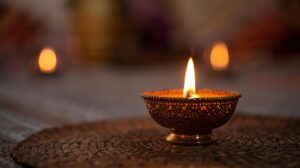
Deepavali, noto anche come Diwali, è una delle festività più importanti e spiritualmente significative dell’India . Quest’anno cadrà il 20 ottobre, e la sua celebrazione va ben oltre le luci e i festeggiamenti esteriori.
Deepavali significa letteralmente “fila di luci” (da deepa = lampada, avali = fila). È la festa della luce, celebrata per cinque giorni, e simboleggia la vittoria del bene sul male, della conoscenza sull’ignoranza, e della luce interiore sulle tenebre spirituali. Possiede quindi diversi significati spirituali, il ritorno alla luce, infatti Diwali rappresenta il ritorno della luce nella nostra vita, intesa non solo come luce fisica, ma come consapevolezza, verità e risveglio spirituale. Rappresenta il viaggio dell’anima, secondo la tradizione vedica, la luce accesa è simbolo del jivatman (anima individuale) che risplende quando è libera dalle impurità mentali e dalle illusioni. Vuole significare purificazione e rinnovamento: le case vengono pulite e decorate, ma è anche un invito a purificare la mente e il cuore. Si lascia andare il passato per accogliere il nuovo con gratitudine. Durante le celebrazioni, si pone l’accento sull’ accensione del fuoco interiore attraverso le lampade accese che sono offerte agli dei, ma anche alla nostra luce interiore, che guida il discernimento e la saggezza.
Inoltre, Deepavali celebra il ritorno del Signore Rama, un’incarnazione del dio Vishnu, nella sua città natale, Ayodhya, dopo un esilio di 14 anni. Durante questo esilio, Rama affronta numerose prove, tra cui la lotta contro il demone Ravana, che aveva rapito la sua consorte, Sita. Rama, con l’aiuto del suo fedele servitore Hanuman e di un esercito di scimmie, riesce a sconfiggere Ravana, liberare Sita e riportare la giustizia e ristabilire il dharma (virtù) nel regno. La celebrazione del ritorno di Rama è un potente simbolo della vittoria della virtù, della giustizia e della moralità. Invita ogni individuo a riflettere su come possa incarnare queste qualità nella propria vita.
Infine, durante Diwali, le famiglie eseguono rituali della puja per ingraziarsi Lakshmi, la dea della prosperità. Le preghiere sono spesso accompagnate da offerte di dolci e fiori.
Diwali non è solo una festa, ma un invito a illuminare il proprio cammino interiore. È il momento ideale per praticare il silenzio, la gratitudine e la presenza.
Deepavali, also known as Diwali, is one of the most important and spiritually significant festivals in India. This year, it will fall on October 20th, and its celebration goes far beyond the lights and external festivities.
Diwali literally means “row of lights” (from deepa = lamp, avali = row). It is the festival of light, celebrated for five days, symbolizing the victory of good over evil, knowledge over ignorance, and inner light over spiritual darkness. Therefore, it holds various spiritual meanings; the return to light indeed represents the return of light into our lives, understood not only as physical light but also as awareness, truth, and spiritual awakening. It signifies the journey of the soul; according to Vedic tradition, the lit lamp is a symbol of the jivatman (individual soul) that shines when it is free from mental impurities and illusions. It means purification and renewal: homes are cleaned and decorated, but it is also an invitation to purify the mind and heart. The past is let go to welcome the new with gratitude. During the celebrations, emphasis is placed on igniting the inner fire through the lit lamps offered to the gods, as well as our inner light, which guides discernment and wisdom.
Additionally, Diwali celebrates the return of Lord Rama, an incarnation of Vishnu, to his hometown, Ayodhya, after a 14-year exile. During this exile, Rama faces numerous trials, including the battle against the demon Ravana, who had abducted his consort, Sita. Rama, with the help of his faithful servant Hanuman and an army of monkeys, succeeds in defeating Ravana, freeing Sita, and restoring justice and dharma (virtue) to the kingdom. The celebration of Rama’s return is a powerful symbol of the victory of virtue, justice, and morality. It invites each individual to reflect on how they can embody these qualities in their own lives.
Finally, during Diwali, families perform puja rituals to invoke Lakshmi, the goddess of prosperity. Prayers are often accompanied by offerings of sweets and flowers.
Diwali is not just a festival but an invitation to illuminate one’s inner path. It is the ideal time to practice silence, gratitude, and presence.
Sorry, the comment form is closed at this time.